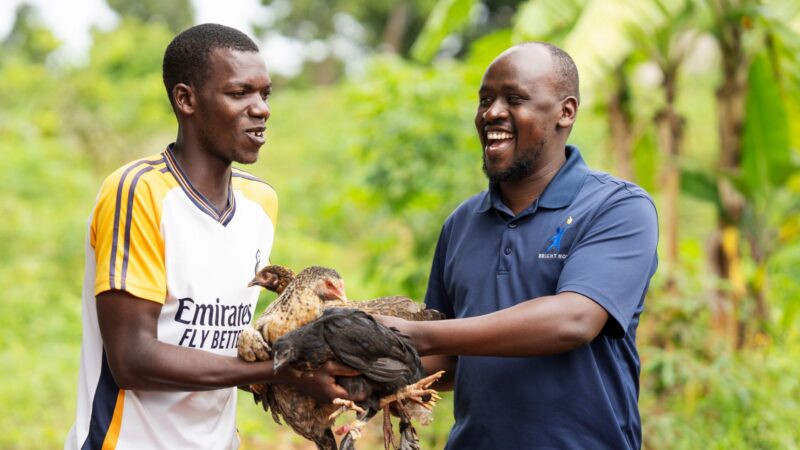

In Uganda’s villages, families work hard in the fields, but poverty and pain fill their homes. Many fathers spend harvest money on alcohol and affairs, while mothers suffer in silence and children drop out of school. Domestic violence breaks families and holds entire communities back.
We’re actively working to change this by teaching fathers how to love and serve their families like Jesus. The Domestic Violence educational campaign in Uganda aimed to transform hearts, families and in time, entire communities.
God invites fathers to serve with love, creating a foundation of care and compassion. He calls families to walk together in unity, supporting one another through life’s joys and challenges. When husbands and wives share planning and build a home filled with respect and peace, children flourish and the whole family grows stronger—spiritually, emotionally and even financially.
In Oyam District, local churches, Fathers’ Clubs and Grandmothers’ Clubs sparked a movement to restore families and end domestic violence. They speak truth, model love, and call men and women to live out God’s design for the home.
Let’s join them. Strong families build strong communities and healing Uganda begins at home.
A Rich Land, A Struggling People
Thomas, who attends one of the Fathers’ Clubs in Oyam, captured the way most men used to think: “We are poor because, as fathers, we prioritize drinking and having fun in extramarital affairs. We waste the money we earn from our garden harvests on these vices instead of working with our wives to improve our families and educate our children.”
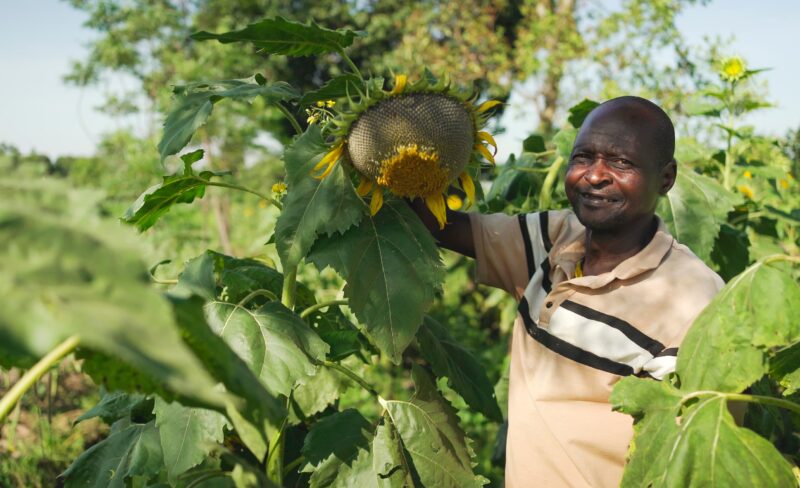
In the heart of Uganda’s Lango subregion lies Oyam District, a land rich in agriculture, yet poor in peace and prosperity. Known for producing soybeans, sesame, cassava and sunflowers, over half of the population here are hardworking subsistence farmers. But despite the bounty from the soil, families continue to suffer under the heavy burden of poverty, domestic violence and disunity.
On the surface, Oyam should be thriving. The region ranks among Uganda’s top producers of staple and cash crops. However, economic abundance has not translated into family well-being. Instead, domestic conflict, especially during harvest seasons, strips many families of the joy and fruitfulness their labor should bring.
At the heart of this brokenness is a painful truth: many men have prioritized alcohol, extramarital relationships and power over collaboration. Proceeds from harvests often disappear into bars and reckless living rather than going toward education, healthcare or home improvement. When wives try to spend their family income wisely, they sometimes face violence or rejection.
The Root of the Problem: A Disconnected Family
As Christian leaders, community elders and concerned citizens shared during a recent Bright Hope domestic violence campaign, the problem runs deeper than money. It’s about family structure. Disconnected relationships between husbands, wives and children have created an environment where poverty thrives.
“Men, we should be providers to our families, not takers,” said Phillip, the local council chairperson. “We must invest in our children’s education, build better homes and create new sources of income instead of wasting God’s blessings.”
Thomas, a Fathers’ Club member, added, “Fathers, prioritize spending time with your children. Teach them not just with words, but through how you live. If we respect our wives and work together, our children will follow our example.”
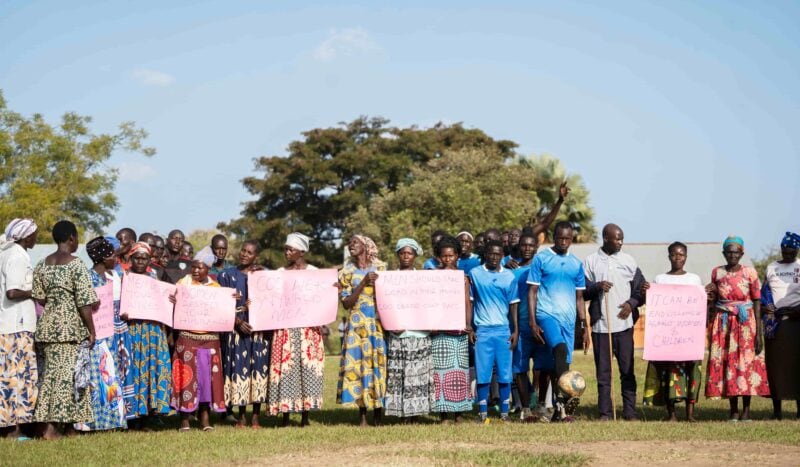
Recognizing the urgent need for change, Bright Hope launched a series of family-centered campaigns in Oyam. The events included football tournaments between Fathers’ Clubs, drama skits, songs by Grandmothers’ Clubs and messages from pastors and teachers—all aimed at healing broken homes and promoting unity.
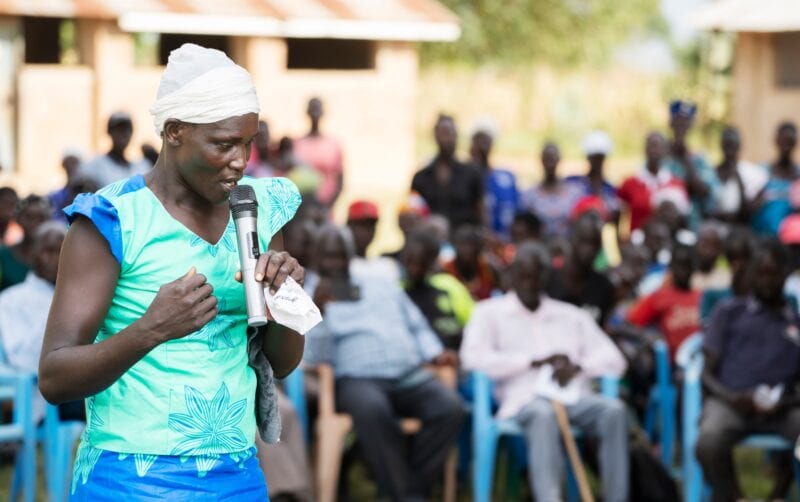
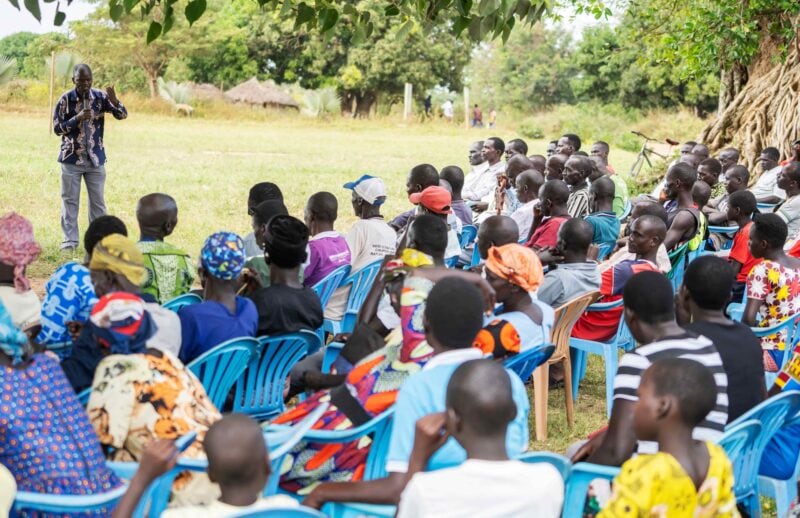
More than 4,500 community members gathered to celebrate, reflect and seek solutions. Couples discussed ways to manage family income, plan together and restore mutual respect. Youths and elders alike were inspired by messages of hope, responsibility and the power of godly leadership in the home.
Mildred, a headteacher, gently reminded families: “Grandmothers and mothers, give your sons and daughters-in-law the peace they deserve. Young women, stop comparing your husbands with others—your marriage is unique, and God can bless it if you nurture it.”
The Path Forward: Unity and Faith
Domestic violence, poverty and brokenness are spiritual battles. When we forget God’s intention for families, we lose the very foundation for lasting peace and prosperity. But we have a hope that hope begins in men who choose to serve with love, wisdom and humility.
Patrick, a Fathers’ Club leader, put it powerfully: “Dictating every decision kills the family spirit. Let us include our wives and children in the planning. Let us love our spouses well so that neither of us seeks comfort elsewhere. If we walk in unity, poverty will not have the final word.”